Is there VAT on solar panels, heat pumps and insulation in 2026?
By Dave Groom·AI-assisted·Editorial policy
Not when they're installed in residential accommodation or a charitable building. HMRC's Notice 708/6 zero-rates the installation of listed energy-saving materials from 1 May 2023 to 31 March 2027. From 1 April 2027 they go back to the reduced rate of 5%. Other building work done alongside them may still be standard-rated.
The zero rate covers the installer's work and the materials they supply and fit. Here's what's on the list and where builders get the rate wrong.
Which installations are zero-rated?
Notice 708/6 lists these energy-saving materials:
- controls for central heating and hot water systems
- draught stripping
- insulation
- solar panels
- wind turbines and water turbines
- ground source and air source heat pumps
- micro combined heat and power units
- wood-fuelled boilers
They qualify when installed in residential accommodation or, from 1 February 2024, a building used solely for a relevant charitable purpose.
What was added in February 2024?
Three more materials joined the list from 1 February 2024: water source heat pumps, batteries for storing electricity, and smart diverters. Batteries qualify whether they're retrofitted to an existing solar system or installed on their own to store grid electricity.
The zero rate also now covers the groundworks needed to install a ground or water source heat pump.
Does it cover a customer's own materials?
Yes. The relief applies to the service of installing energy-saving materials, including where the customer bought the materials from a retailer and you only fit them. It also covers materials you supply as part of the installation.
Which heating appliances don't qualify?
Only boilers designed to burn solely wood, straw or similar plant matter count as wood-fuelled boilers. Multi-fuel and dual-fuel boilers are standard-rated, and so are stand-alone wood-burning stoves.
Building a log store or fuel store is standard-rated too.
What if the installation is part of a bigger job?
HMRC looks at whether you're making one supply or several. Notice 708/6 gives examples:
- cutting a new loft hatch to fit loft insulation is part of one zero-rated supply
- a central heating system with a heat pump instead of a boiler is one zero-rated supply
- insulating the walls and roof of a new extension is part of one standard-rated supply, because the extension is the main element
Where the parts are distinct, they're separate supplies, each at its own rate. HMRC treats separate pricing and separate invoices as signs of separate supplies.
What about grant-funded heating?
Notice 708/6 has a separate relief at the reduced rate of 5% for grant-funded installations of heating equipment, covered in its section 3. If you do other building work under the same grant, such as repairs, that part is standard-rated.
What changes on 1 April 2027?
From 1 April 2027, installations of energy-saving materials go back to the reduced rate of 5%, and so do the heat pump groundworks. Work you quote now but carry out after that date may fall at the new rate.
Check the tax point rules in Notice 708 for jobs that run across the change, and say on longer quotes that the VAT rate is the one in force when the work is done.
How should the quote show it?
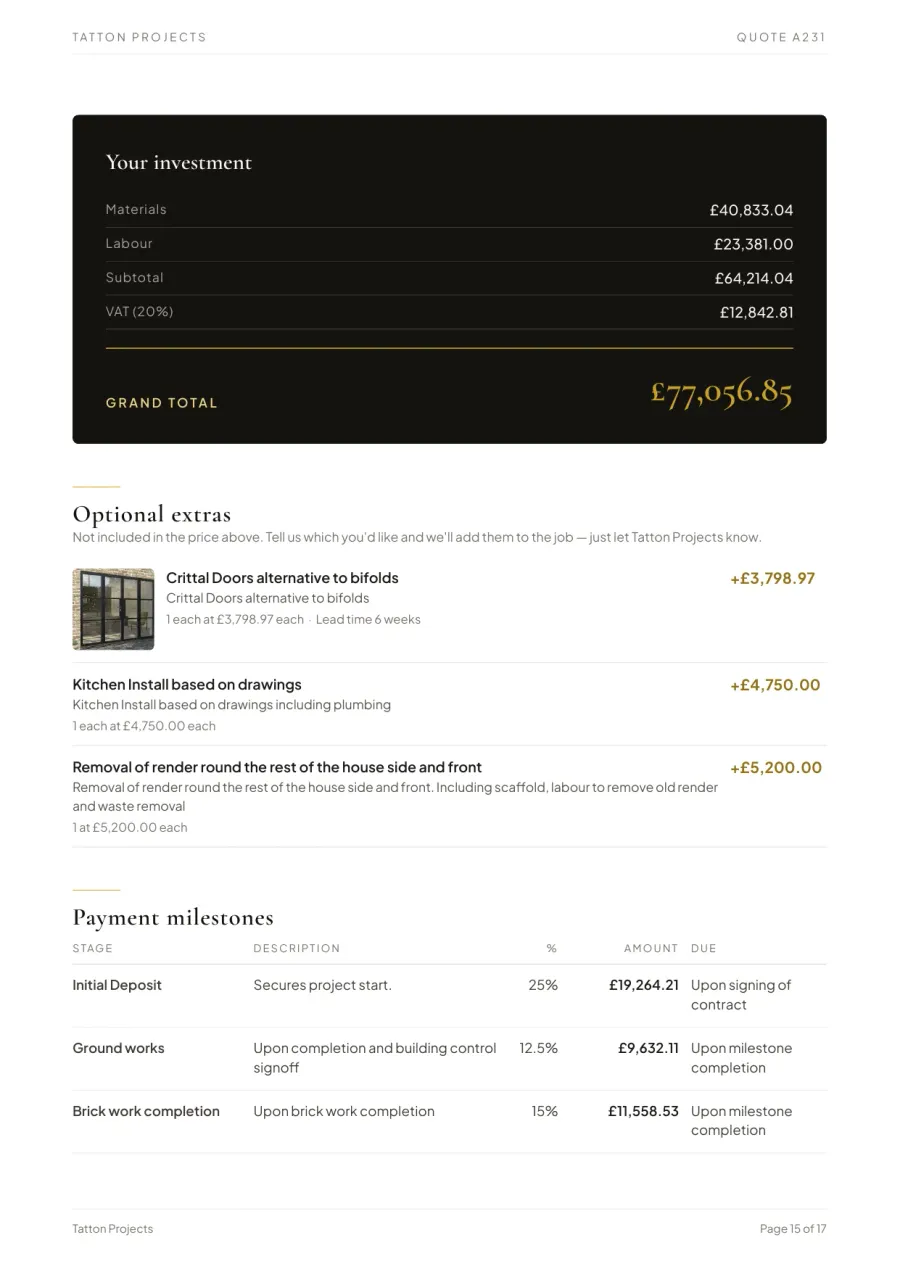
Price the zero-rated installation on its own lines, with the rate and "Notice 708/6" next to it. Put any standard-rated building work, such as a new roof or an extension, on separate lines at 20%.
Our guide to VAT rates on building work covers new builds, conversions and empty homes.
Sources and further reading